

why you can read a room but not your own feelings
the empath learns to feel everyone but themselves

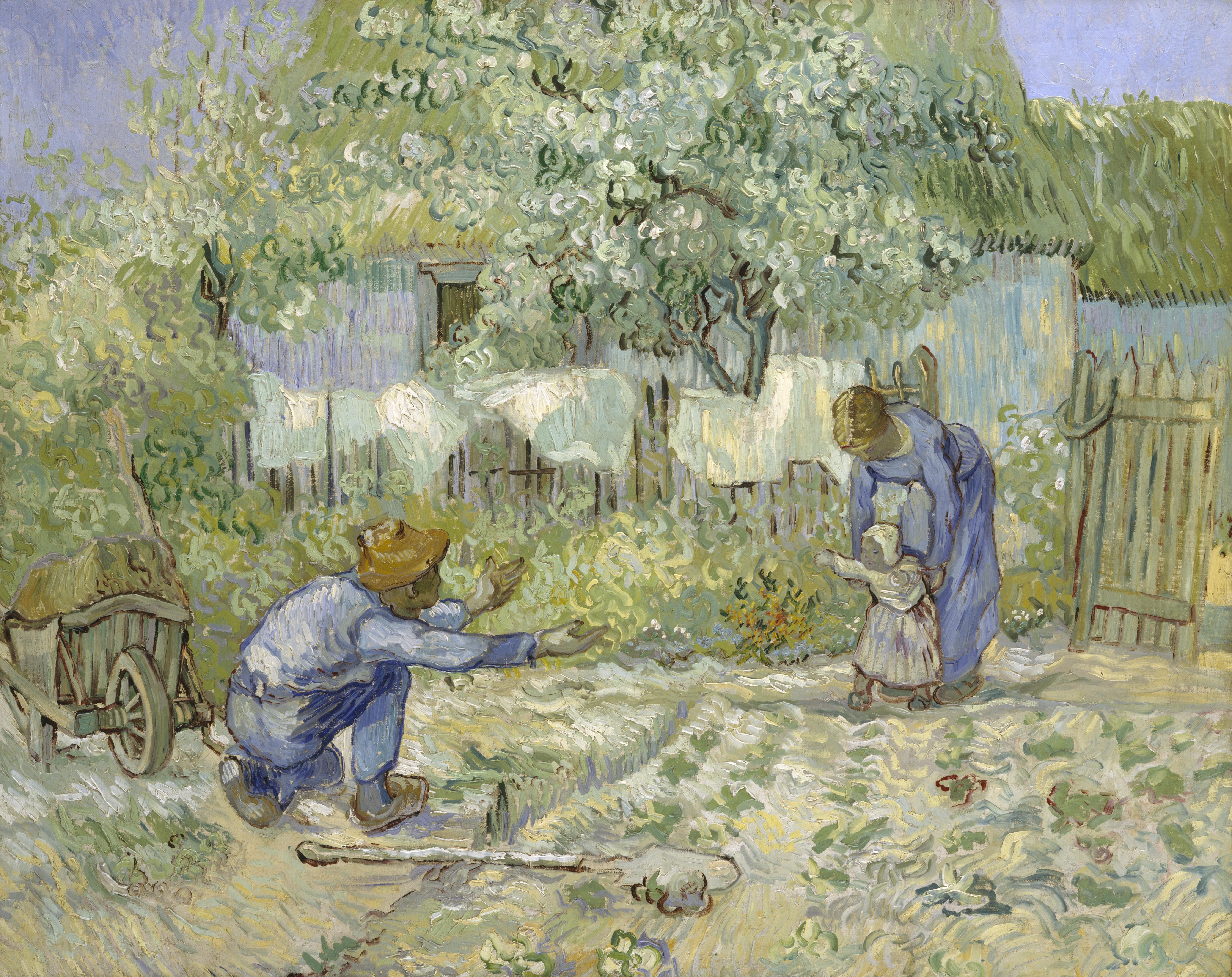
how many of you can relate to growing up in unpredictable environments as children?
and if you consider yourself to be sensitive, creative, or empathic, which as humans, it’s our birthright to be, it’s highly likely that these very human traits got dimmed, dulled, or even buried, the moment survival programming switched on instead.
we often learn as children, and especially as sensitive and empathic children, to feel everyone except ourselves.
we become fluent in every nervous system except our own.
we can read a room before we’ve even said hello.
and then we learn to know the emotional weather of a parent, a partner, a stranger, before we know our own.
it was a survival skill, learned young, always monitoring where the caregiver’s subconscious script was running. and this produces anxiety, self doubt, a constant static under everything said and done.
this isn’t a personality trait, this is a body that learned reading everyone else was the price of survival.
and there’s language for this now. i didn’t know it growing up, and i barely had it several years ago. but there are terms used by psychologists and common folk alike.
this is what happens to your nervous system under assault:
the fawn response — most people know fight, flight, freeze. well fawn is the fourth. it’s more commonly known as people pleasing. and it’s when a child’s environment isn’t safe. the strategy becomes to exquisitely attune to the moods and needs of the people around you, so you can adjust yourself before anything bad happens. it’s a nervous system that learned prediction was safer than reaction.
enmeshment— the family systems word for what happens with caregivers specifically. a child’s job becomes managing the emotional climate of the household, often without anyone naming it. the child’s internal experience gets absorbed into the caregiver’s, so there’s no clear signal left for what do i feel, separate from what does this person need from me.
hypervigilance — this is what happens when one 'jumps out of their body' to scan. a threat detection system stuck in the on position, exhausting because it never learned how to turn off, even in rooms that are actually safe now.
put those three things together and you get a person who can read a whole room in a second and cannot tell you what they, themselves, are feeling in that same second.
that was me. and it may have been you too.
and here’s the part that seems like a contradiction, but isn’t.
at the same time your sense of self gets built entirely from outside, from reading everyone else, something else happens on the inside.
you take what was never yours to hold, and you pull it inward instead.
you make it your fault.
because if it’s your fault, if the hard thing, the scary thing, the thing you couldn’t explain or predict or protect yourself from was somehow caused by you, then maybe you have some control over it, maybe next time you can stop it.
a child would rather be guilty than powerless.
guilt at least comes with a plan, while powerlessness doesn’t.
so you build a self identity out of other people’s reactions on the outside, and you build a cage out of self blame on the inside.
the thoughts that fuel you become—
if i can just read them well enough, if i can just be good enough, careful enough, responsible enough, then i can keep it from happening again.
that’s not logic. that’s a child’s nervous system trying to survive an unpredictable world the only way it knew how, by making itself responsible for the unpredictable.
shame is something you build, brick by brick, because it feels safer than chaos.
and we keep doing it as adults because of how the brain actually works.
every time you run a thought, a feeling, a reaction, your neurons fire together, and the ones that fire together, wire together.
the more you run a pattern, scanning the room, doubting yourself, bracing for impact, overriding your own feeling to track someone else’s, the stronger and faster that pathway gets.
until it goes from a dirt path, to a paved road, to a six lane highway.
the brain doesn’t care if the highway is good for you, it only cares that it’s efficient. and a well worn path is always more efficient than building a new one.
this is called neural pathway reinforcement, and your brain isn’t trying to keep you happy. it’s trying to keep you fast. it’s trying to keep you alive. you are wired for survival.
and under stress, under uncertainty, under anything that even smells like the old unpredictability, your brain doesn’t reach for the calm option, it reaches for the highway because the highway is what’s already built.
this is why we can’t heal from the mind alone and insight by itself doesn’t change you.
you can know all of this, name the fawn response, name the enmeshment, understand the whole architecture, and still find yourself back on the highway the second something triggers the old pattern.
knowing isn’t the same as rewiring.
what changes it is creating new repetition in the other direction.
every time you catch yourself mid scan and choose to stay in your body instead.
every time you feel the fear and don’t immediately assume it must be your fault.
every time you speak the true thing without leaving yourself to go check if it landed safely.
these moments are like a single footstep in the grass next to the road. but paths get built one step at a time, same as the old one did.
trauma changes the brain, but healing does too.
that’s not just a saying. that’s neuroplasticity.
the same mechanism that built the hypervigilance highway is the mechanism that builds the new path.
but it isn’t as simple as deciding to feel the fear instead of scanning the room.
the choosing comes after something else first:
safety.
the nervous system has to believe it’s safe enough to try a different road at all.
the brain doesn’t build new pathways while it’s in threat mode, it builds them when the nervous system is regulated enough to have bandwidth left over for something other than survival.
you cannot think your way out of a body that’s still bracing.
so what actually creates that condition?
nervous system regulation first, the actual physiological state.
there are many practices that can help the nervous system to regulate. breath work that lengthens the exhale, cold exposure, or temperature changes, movement that discharges the stored activation instead of just distracting from it.
in essence, whichever somatic practices that let the felt sense of safety register in the body, not just the mind.
and co-regulation, since your nervous system learned danger in relationship, so a lot of the repair happens in relationship too.
a felt sense of safety with another person, a therapist, a partner, a friend, someone who can stay steady while you’re not, teaches the nervous system something no amount of solo effort can.
none of it happens all at once. it takes sustained repetition, in an actual regulated state, over months, sometimes years, in doses small enough that the nervous system can stay online while it happens, before the new path is reliable enough to reach for under real stress.
this is why i couldn’t just decide to stop hypervigilance and people pleasing, even when i began to realize the slave i had become in the cage i had built for myself.
i had to build actual safety instead first, in my body, in my relationships, before staying present instead of scanning was even available to me as an option.
my youngest cries sometimes when we talk about her angry outbursts, and how we can work on controlling it.
she says, but mama, i can’t help it when i shout “shut up.”
and she’s right. she can’t. not in that moment.
when we’re flooded, when the nervous system is in fight or flight, we are not in a state where willpower lives.
the part of the brain responsible for choosing, for pausing, for thinking before you speak, goes offline under real threat activation.
it isn’t a character flaw. it’s our biology.
so we don’t get to walk in the front door and change it all there.
instead we have to go in through the side door.
because the side door is the parasympathetic nervous system, the state of rest, of safety, of feeling like the danger has passed.
that’s the only state where new choices are actually available.
we call the part of the brain that can choose the wise brain, or the prefrontal cortex. and the wise brain only comes online when the body feels safe enough to let it.
and in order to feel safe, we need our physical needs met. we need a roof over our head, safe, predictable people around us.
we don’t need overstimulation from chaotic screen filled environments, we need rest, food, nature, nurture, and care.
and the thing nobody talks about when we talk about healing, is that those same conditions are actually quite scarce on this planet for enormous parts of the human population.
there are countless children right now falling asleep to the sound of bombs, not lullabies, while there are also far too many children growing up in homes where addiction runs the household instead of a parent, where the unpredictability is the entire architecture of the home.
and this isn’t just a poverty story.
you can walk into the wealthiest homes, the safest looking neighborhoods, and find the same addiction, the same unpredictability, the same nervous systems trained young to scan for danger behind closed doors nobody else ever sees.
money doesn’t buy a regulated household.
abuse doesn’t check your income bracket before it walks in the door.
you cannot regulate a nervous system that is at war, whether that war is a country falling apart or a house that looks fine from the outside.
so when we talk about needing safety before the wise brain can come online, we’re not just talking about an individual’s inner work.
we’re talking about a set of conditions huge parts of the world do not have, in every class, in every zip code.
food. shelter. rest. predictable people, sober people, safe people.
these aren’t luxuries.
they’re the actual prerequisites for a human nervous system to do what it was built to do.
but this also doesn’t mean healing is impossible without perfect conditions.
it just means we should stop treating dysregulation as a personal failing when so much of the world is structurally denied the safety that regulation requires.
healing looks different for everyone and there’s no universal formula, no five step plan that applies to every nervous system and every history the same way.
but there is one thing that has to come first, no matter who you are or what you’re healing from.
we have to create the physical and emotional safety container before anything else can happen.
we have to put on our own oxygen mask first, as an actual sequence.
safety first, everything else after.
for me, that looked like walking away from toxic relationships, no matter who they were to me, no matter how close, no matter what role they played for my kids or for me.
toxic, to me, is anyone who won’t take accountability for their actions, anyone who won’t admit when they’re wrong, anyone who won’t be honest, and won’t honor your truth.
and i am not just talking on the surface, not just the version where they say the right thing to your face and do something else behind your back, because lip service is easier than actually changing.
i couldn’t build a regulated nervous system inside relationships that required me to stay hypervigilant just to survive them.
i had to walk from all the ones that thrived on me staying small. i have walked away from family, from life long friendships, from business partners, acquaintances…
and then i had to learn to listen to what my intuition was telling me, underneath the hum of anxiety i had learned to call my resting state.
i had to start spending hours at a time outside, when i wasn’t tending to tasks and kids were at school.
and i’m lucky, because for me, work is being a mom.
still, raising four kids by myself is a lot, mental and physical work that never stops, but so many people have to do this and hold down a job on top of it.
so i had the privilege of having hours to spend feeling what i was never allowed to feel.
i went on retreats, where i could be held in a safe container and do the deep dives into everything buried.
i let the house fall apart. food was mac and cheese, frozen pizza, rice and beans, some veggies or fruit eaten raw straight out of the fridge, for the kids and for me.
i forgot appointments and didn’t beat myself up about it.
i hardly socialized, barely went to gatherings. it was too hard, and i missed finn too much.
it meant going for walks to clear my head while the electronic babysitter played on and on and on.
it meant writing here, about all the messy stuff.
it meant spending a lot of money on therapy.
a lot of these things came with the privilege of being financially stable, from the foundation i received when finn died.
but i also did this exact work on food stamps, in a safe house apartment, when the girls were little and i fled their abusive dad.
that’s when i first learned many of the same practices. back then i journaled, i practiced gratitude, and i did what i could while broke and working full time too.
the bottom line is that healing looks different for everyone.
but if you get focused on putting your healing work first — the most important work that i believe we have as humans — it starts weaving itself into your work schedule, your caregiving, your real life.
that’s what putting yourself first means to me.
that’s what it looks like to start a self love revolution.
thanks for joining me for any part of it.
i love you.
if any part of this is your story too, i’d love to hear your thoughts.
i am a writer, speaker, and musician devoted to healing and embodiment. i share essays, poetry, and original music through venus consciousness. 💞
So well explained Venus. I've been reading rooms my whole life trying to get a grip on what I actually feel inside - and why I'm always on the 6-lane expressway. I'm still trying to regulate my nervous system. And never heard the Fawn term - hate the fawny people pleaser and why I'm still rebelling from all of them... or it.
Great line here:
"abuse doesn’t check your income bracket before it walks in the door"
It sure as hell does not.
Great. You have given me a lot to think about.